
Interior & Spatial Design at Acharya School of Design is crafted for creative thinkers who want to shape functional, aesthetic, and human-centric environments. The programme blends spatial planning, material exploration, and experiential design with global design perspectives, enabling students to transform interiors into meaningful, immersive spaces. From the first year, students engage in design fundamentals, space planning, and visualisation techniques, gradually advancing into lighting design, furniture systems, and sustainable spatial solutions. The learning goes beyond aesthetics—it builds the ability to analyse, conceptualise, and execute spaces that respond to real-world user needs and evolving industry trends.
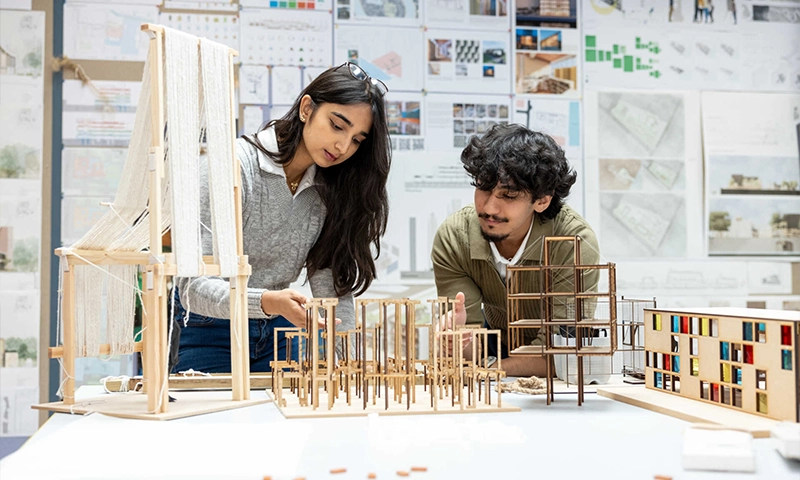
Students develop expertise in spatial planning, materials, lighting, and interior systems, while learning to conceptualise and execute design solutions through studio-based projects. The programme is enhanced with a European Design Certification from Accademia del Lusso, Milan (Italy), introducing global spatial design perspectives.
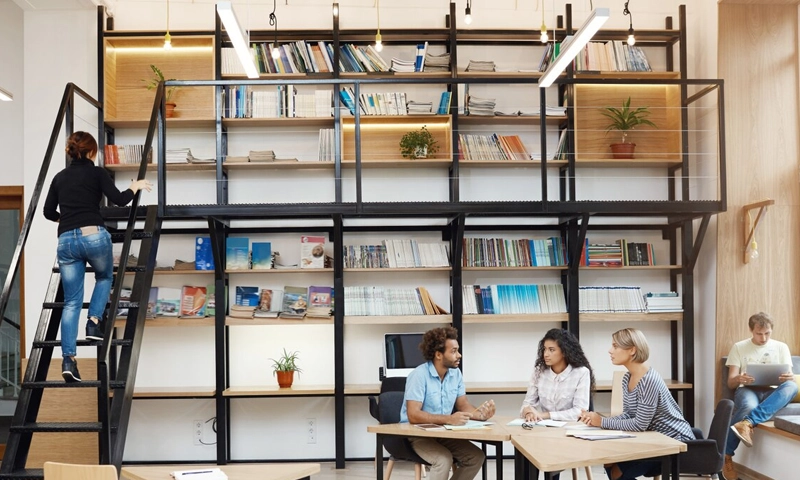
The programme emphasises hands-on learning through studio practice, enabling students to design, visualise, and execute spatial concepts.
Students gain exposure to global spatial design trends, European aesthetics, and international design frameworks through Accademia del Lusso.
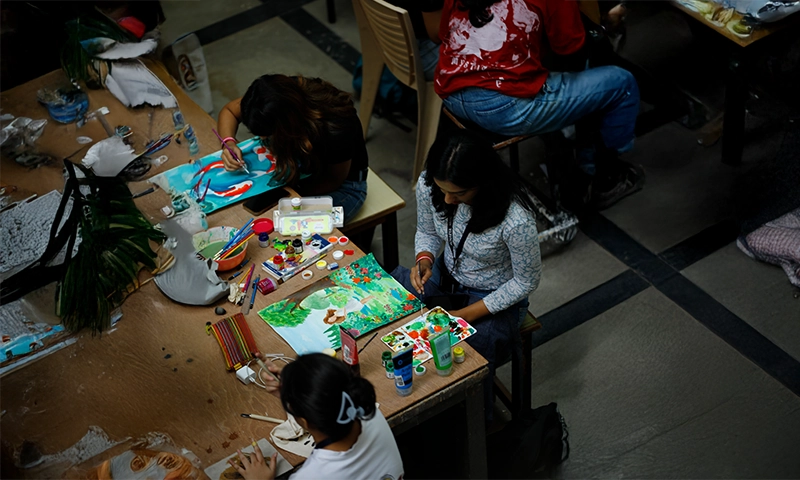
At Acharya School of Design, students don’t just study design — they experience global design education from day one. Through our collaboration with Accademia del Lusso, Milan (Italy), students get:
Accademia del Lusso is a prestigious Italian institution based in Milan and Rome, specialising in Fashion, Design, and Luxury Management — recognised by the Italian Ministry of Education and part of Europe’s formal higher education system.
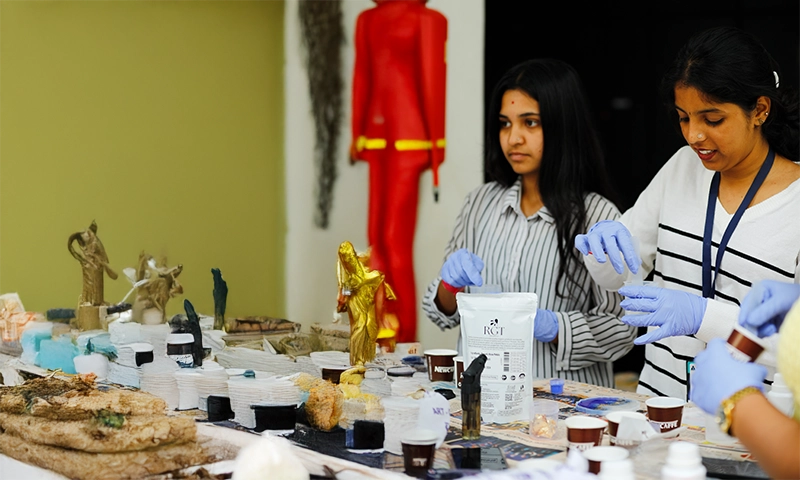
The programme trains students in spatial planning, lighting, materials, and interior systems, along with a European Design Certification from Accademia del Lusso, Milan, giving them global design exposure.
Students receive a European Design Certification from Accademia del Lusso, Milan, which introduces them to international design frameworks and European spatial design trends.
The European Design Certification from Accademia del Lusso strengthens students’ portfolios, adds international recognition, and improves opportunities for global higher education and careers.
Students learn space planning, furniture design, lighting, materials, and 3D visualisation, while earning a European Design Certification from Accademia del Lusso.
Yes, the programme includes studio projects, internships, and workshops, combined with a European Design Certification from Accademia del Lusso, making students industry-ready.
Yes, students gain international exposure through the European Design Certification from Accademia del Lusso, Milan, aligned with global design standards.
Graduates can work as interior designers, spatial designers, exhibition designers, and consultants, with added value from the European Design Certification from Accademia del Lusso.
Acharya offers hands-on learning, industry integration, and a European Design Certification from Accademia del Lusso, helping students build globally competitive design careers.



 74066-44449
 97317-97677


